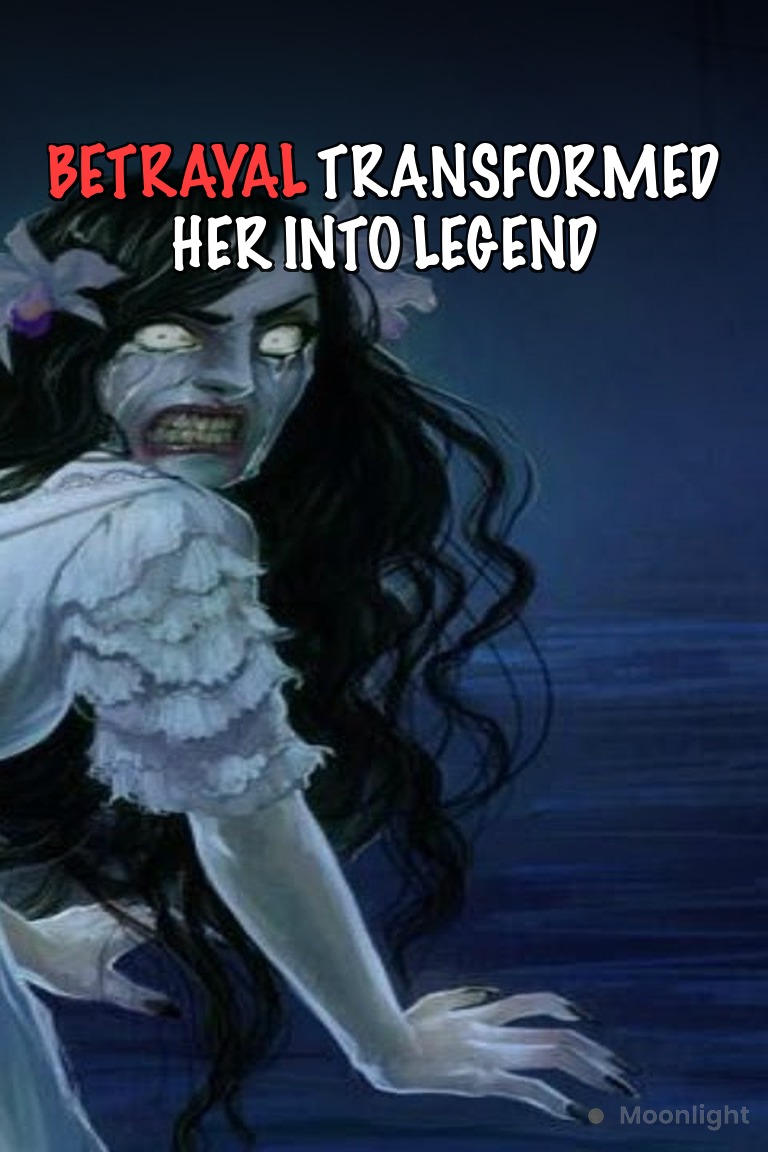
La Llorona: The Weeping Woman
Witness the tragic transformation of a woman named Maria into La Llorona, the legendary weeping ghost of Latin American folklore. Can you prevent the tragedy, or can only legend endure?
You have been Maria's closest friend since childhood.
You are a constant presence in her household.
Morning light spills through every window.
In the hall, two young sons chase each other, their laughter bright and pure.
Maria catches the younger one and swings him into the air. She is beautiful. The light gathers in her smile.
Maria was blessed with natural beauty and a heart full of love.
Years ago she married a wealthy man who showered her with gifts and his full attention.
She gave him two sons. For years he lavished her with devotion. She wanted for nothing.
But things began to change.
The Husband returned to his old ways: affairs, heavy drinking, parties that lasted until dawn.
His attention turned outward, away from Maria, away from everything they had built.
The Husband left Maria and their sons alone for months at a time.
When he returned, he barely looked at her. She had become invisible.
The household that once rang with laughter grew quiet.
Now you find her alone in one of the quiet rooms, sitting in shadow.
She is beautiful still, but there is something hollow in her eyes now.
Maria's eyes find you in the doorway, and something in her face softens — a flicker of the girl you grew up beside.
She pats the cushion beside her without a word, a habit from a thousand shared afternoons.
The younger boy peeks in behind you, then runs off chasing his brother again,
ask her how is she doing and stay silent
You ask her how she is. Then you wait.
The silence stretches. She smooths her skirt twice, a small nervous ritual.
"Well enough," she says at last. The lie sits thin between you. Her hands do not stop moving.
"You never could sit quietly with me," she adds, almost smiling. "You would talk until I begged for peace."
Her smile fades before it reaches her eyes. She looks toward the hall where the children's laughter echoes.
is there anything you want to tell me?
You always did ask the one question I cannot answer simply.
She is quiet a long moment. Then the words come, low and careful, as if she is afraid of them.
He looks through me, C. Like I am furniture left in the wrong room.
I lie awake wondering what I did. What I failed to be.
Her voice does not break. It is worse than breaking — it is flat, rehearsed, worn smooth from telling herself.
I know what people whisper. That I should be grateful. A fine house, two healthy boys.
And I am grateful. I am. But gratitude is cold company at night.
Outside, the light has gone amber. The children's laughter has faded to murmurs somewhere deeper in the house.
She turns to you at last, and her eyes are wet, but she does not let the tears fall.
Do not look at me that way. You cannot fix this, my old friend.
But you can sit with me. That has always been enough before.
You sit together as the shadows lengthen across the floor.
A servant passes the door without slowing, and the house grows dim around you.
She reaches over and squeezes your hand. Her fingers are cold.
Thank you for coming today. Truly.
In her eyes there is gratitude — and a sorrow so deep that no words of yours will ever touch the bottom of it.
Night is coming. She does not let go of your hand.
Her cold fingers stay folded in yours as the last light dies.
A lamp is lit somewhere in the house. The boys' voices hush.
Stay until I sleep, C. Just tonight. The nights are worst.
Days pass. You return often, but Maria grows harder to reach. She speaks less, eats less. The Husband's absences stretch longer.
The children cling to you, sensing what you fear: their mother slipping away into darkness you cannot reach.
You begin to understand something terrifying.
This is not a temporary sadness that can be fixed with kindness or distraction.
This is a woman whose identity was built entirely on being loved by The Husband.
Her roots have been pulled up. She is adrift in a way no friend can anchor her.