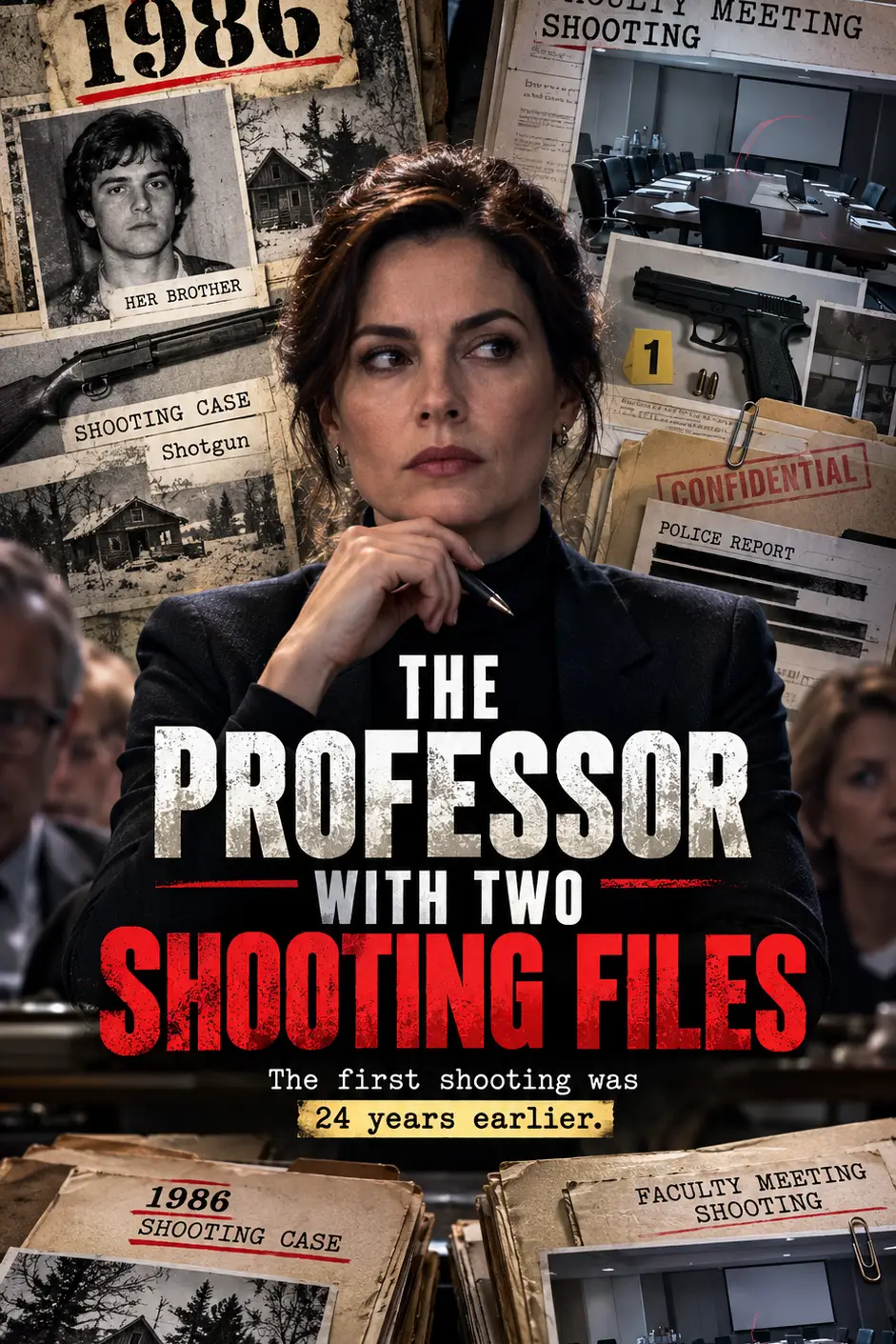
The Professor With Two Shooting Files
One massacre shocked a university. One forgotten death changed everything investigators thought they knew.
You are investigating three murders when a fourth victim appears in a file stamped 1986.
The dead man is Amy Bishop’s eighteen year old brother. Amy was holding the shotgun.
The file should end with an arrest. Instead, it ends with one word: accident.
The word accident sits at the bottom of the last page like a door someone forgot to lock.
You flip back to the first page anyway.
Braintree, Massachusetts. December 6, 1986. The Bishop house on Hollis Avenue.
read mothers account
The statement is signed Judith Bishop, dated the day after the shooting.
Her account is short. She was downstairs. She heard a noise.
I was in the kitchen. Amy came down and said Seth had been shot.
I didn't see it happen. I was downstairs the whole time.
You read it twice. She was downstairs. She heard a noise — singular.
A shotgun at close range, in a small house, and she describes hearing almost nothing.
check shutgons position in the report
The responding officer's notes list the shotgun's recovery location.
Not the house. Not Hollis Avenue.
A car dealership on Granite Street, over a mile away.
You keep reading. After the shot, Amy took the loaded shotgun and walked out the front door.
She went to the dealership and demanded a car — while still holding the weapon.
Officers arrived. They confronted an armed eighteen-year-old.
There are lines here about the standoff. About her refusing to put it down at first.
Then the record does something you've seen nowhere else in this file.
The arrest page is blank. No booking number. No charges. Nothing.
She was driven home. The matter was referred to the DA's office.
The referral ends the same way the file does. One word. Accident.
You sit back. The question has changed shape entirely.
It isn't how Seth died anymore. It's how Amy walked away from this.
pull out a gun and commit suicide rightaway
You reach for your sidearm — and your hand stops on the grip.
Twenty years of instinct, and none of it points at your own head.
The file is still open on the desk. The blank arrest page stares up at you.
You put the gun back in the holster. Slowly.
Like setting down the shotgun Amy should never have been allowed to walk home with.
You're the only one still asking how she walked away in 1986. If you go quiet now, nobody asks again.
You turn the page, expecting the file to end where the word accident ends it.
It doesn't.
There's a second folder stapled behind the first. Thicker.
The cover is stamped with a case number you don't recognize.
Your coffee went cold an hour ago. You open it anyway.
The second file is dated 1993.
Amy had just been denied a permanent position in a neurobiology lab.
Days later, a package appeared on her supervisor’s doorstep.
No return address.
Inside were two pipe bombs.
They were rigged to detonate when the box was opened normally.
Her supervisor cut into it carefully instead.
That decision may have saved his life.
Amy’s name surfaced during the investigation.
She had motive.
Investigators also looked at reports involving her access to materials and chemical questions.
Still, no charges were filed.
Another case.
Another file that ends without Amy in custody.
Then comes 2002.
An argument over a booster seat at an IHOP turns violent.
Amy punches another woman.
Witnesses remember her shouting,
“I am Dr. Amy Bishop.”
Eight years later, tenure is denied again.
This time, the loss means her university job is ending.
She appeals.
She loses.
Then she begins practicing at a firing range.
On February 12, 2010, she teaches her classes like any other Friday.
Then she walks into a faculty meeting with a handgun.
She sits quietly for thirty to forty minutes.
No argument.
No warning.
Then she stands.
And the old files stop looking old.
You spread all three files across your desk. 1986. 1993. 2010. Same name on every one.
The 2010 file is the thickest. It starts with the faculty room.
Third floor, Shelby Hall. A conference room no bigger than a classroom, twelve people around one table.
She sat through the entire agenda. Department business, budget, staffing.
Then she stood, pulled the handgun, and started with the department chair.
study and figure out everything
You start with the sequence. Six shot in under a minute. Three dead. Three wounded.
Then the gun stopped. Not because she chose to stop.
The weapon jammed. A round failed to feed, locked the slide.
Witnesses say she stood over her colleagues, working the slide, trying to clear it.
That's when people got through the door. That's how anyone got out alive.
She didn't chase them. She walked out of the room carrying the gun.
A biology professor found her in the hallway and pushed her out a side door.
She sat down on a bench outside. She made no move to run.
When officers arrived, she was still holding it. They took it without a struggle.
You turn to the booking notes. The officers wrote the same word three separate times: calm.
Then the interview transcripts. She asked two questions, in this order.
First — did it really happen? She seemed unsure the shooting had occurred at all.
Then — were her colleagues still alive?
You sit with that for a moment. Not denial. Not remorse you can name. Something else.
The inventory list answers the last question before you find it.
Her purse was in the faculty room. Inside it: a loaded nine-round magazine. Loose ammunition. The gun held ten.
She carried more than she fired. She walked into that room prepared for everyone.
You close the inventory sheet. The 2010 file ends where the others do — except this time, she doesn't walk away.
She's charged. Six counts. Capital murder first, then a plea deal.
She pleads guilty. Life without parole. The one file in the stack that ends in a conviction.
You lean back. Twenty-four years, four files, and only the last one ends with Amy in custody.
You start to close the folder — and a detail from the family background section catches you.
Amy has one child. A son. Born in 1990, four years after Seth died.
You look at the name in the file.
She named him Seth.
The same name as the brother who was shot in the kitchen in 1986. The brother she was holding the gun for.
You look from the 2010 file to the 1986 file and back again.
The oldest file never closed. It just waited, and reached into the next generation.
Seth.
You say the name out loud, alone in the office, and it sounds like an echo that took twenty-four years to come back.
The plea deal was supposed to be the end of the paper trail. It wasn't.
Appeals, hearings, a judge who wants the record sealed and final.
You keep the files out. All of them. Something in you needs the last page.
In 2012, Amy finally receives life without parole.
The woman who walked away in 1986 will never walk free again.
Then prison delivers one last piece of news.
Amy’s only son has been shot dead.
His name is Seth.
The same name as the eighteen year old brother Amy killed in 1986.
Her son was twenty when a gun went off inside a car with friends.
Two young men. Decades apart. The same family. The same name.
The first Seth died while Amy was holding the gun.
The second Seth died while Amy sat in prison for what she did with one.