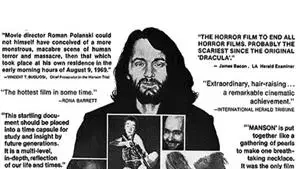
Helter Skelter: The Story of a Cult
This is the story of his rise, the psychology behind his influence, and the dark consequences of blind loyalty.
Before the world knew his name, Charles Manson was just a thin, restless boy from nowhere.
He was born in 1934, in Cincinnati, to a sixteen-year-old mother who drifted between relatives and
trouble. His father vanished before he took his first breath; his mother, Kathleen, spent short stints in jail.
For most of his early years, Charles lived with whoever would take him.
What he learned, more than reading or kindness, was how to survive by reading people.
By ten, he’d already run away from reform schools—places that beat lessons into boys rather than teaching them.
Every punishment only hardened him. He discovered something that would follow him for life: if you looked confident
enough, people would believe you were in control. Through the 1950s, small crimes turned into bigger ones—stolen
cars, forged checks, manipulation. He spent more time behind bars than free.
But prison gave him something unexpected: an audience. Inmates listened when he talked.
He studied how a smile, a whisper, or a sudden glare could move people like pieces on a board.
Religion, music, psychology—he absorbed bits of all of it. When he walked out of prison in 1967, the world had changed.
California was the heart of the counterculture—peace, love, rebellion—and Manson arrived right in the middle of it.
To some, he looked like a prophet: long hair, quiet eyes, and a voice that mixed scripture, song lyrics, and
street wisdom. To others, he was just another drifter. But for the young and lost, he offered something they couldn’t
find at home: absolute belonging. He gathered them one by one—girls escaping strict families, boys avoiding war,
dreamers chasing freedom. They called him Charlie. They believed every word.
He told them that society was poisoned, that only by surrendering the self could they be pure.
He gave them songs to sing, food to share, a desert ranch to live on, and a new identity: The Family.
What no one outside saw yet was the slow shift from harmony to control. Rules began to replace freedom;
"love"
started to mean obedience. Manson’s charisma was turning into a cage—and his followers didn’t even notice the lock.
Comments
Bajjan Ismail
Im so curiosu to read this book now!!